What Is AEO? Answer Engine Optimization Explained
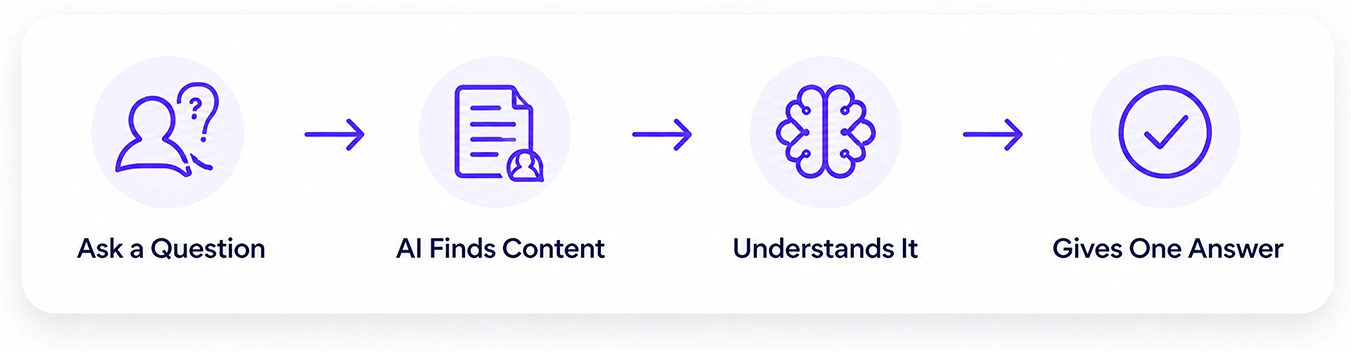
AEO is the practice of optimizing content so search engines and AI-powered answer engines can find, understand, and provide direct answers to user questions. AEO exists because modern search increasingly delivers answers through featured snippets, AI Overviews, voice assistants, and conversational search instead of only traditional search results.
The AEO definition focuses on creating clear, direct, and useful answers that match user intent. It can support visibility across featured snippets, AI Overviews, voice search, and conversational search experiences.

Optimize for Direct Answers

Improve Voice & Search Visibility

Get Discovered by AI Search
Why Does AEO Exist?
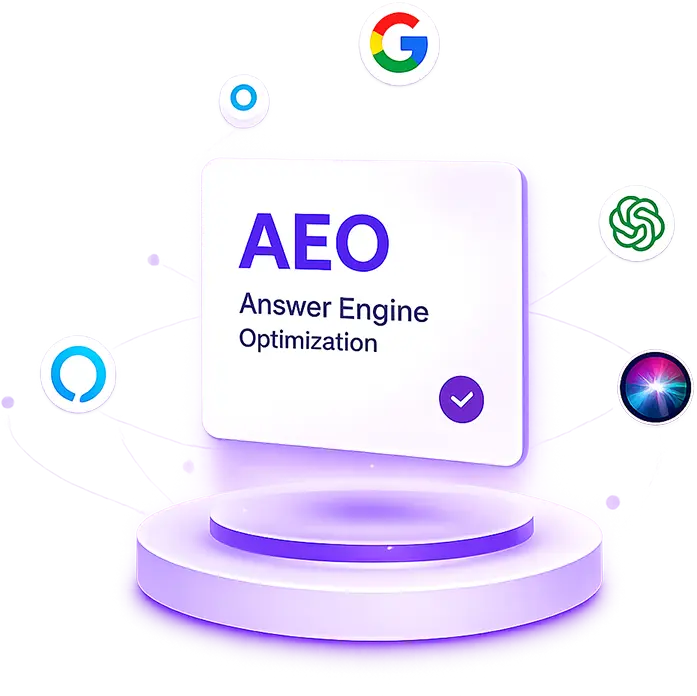
AEO exists because search is increasingly focused on providing direct answers rather than only presenting a list of links. Search engines, voice assistants, and AI-powered answer engines can answer questions directly, so content needs to be clear, structured, and easy for these systems to understand.
Users may encounter direct answers through Google Featured Snippets, People Also Ask, AI Overviews, voice search, and conversational AI platforms. These experiences can reduce the need to browse multiple pages before finding an answer.
This shift creates an opportunity for businesses and publishers to optimize their content for answer-focused search experiences. Answer Engine Optimization helps make useful information easier for search and AI systems to understand, extract, and potentially surface when responding to relevant questions.
In many answer-focused search experiences, users see a direct response instead of browsing a traditional list of results. AEO focuses on making your content clear enough to potentially be selected as part of that answer.
This isn’t a fringe behavior. Research from SparkToro shows more than 38% of Google searches now end without a single click. The user gets their answer directly in an AI Overview, Featured Snippet, or People Also Ask card. Voice search alone accounts for roughly 27% of all search queries. According to industry research, around 40% of voice answers are pulled directly from a featured snippet —Learn more about Answer Engine Optimization and explore Search Engine Land’s AEO guide. You can also check your website’s AEO and AI search readiness with our free SEO audit tool.
How Is AEO Different From SEO?
| Comparison | AEO vs SEO | AEO | AEO vs GEO |
|---|---|---|---|
| Optimizes For | Ranking in a list of links | Providing clear, direct answers to user questions | Improving visibility in AI-generated answers |
| Typical Surface | Search results pages | Featured snippets, voice search, AI-powered answer experiences | Google AI Overviews and other AI-powered search and answer experiences |
| Success Looks Like | Higher rankings and more organic clicks | Earning visibility in featured snippets and answer-focused search experiences | AI citations, mentions, and brand visibility—even without clicks |
| Core Levers | Keywords, backlinks, technical SEO, crawlability | Question-focused content, FAQs, schema markup, concise answers | Entities, structured data, semantic clarity, trusted sources |
| Content Style | Optimized to rank first, then persuade readers | Clear, concise, self-contained answers | Comprehensive, well-structured, AI-citable content |
| Measurement | Rankings, impressions, CTR, organic traffic | Answer visibility and relevant search features | AI citations, LLM visibility, brand mentions |
SEO, AEO, and GEO are complementary strategies rather than separate choices. A strong page can be technically optimized for traditional search, structured to answer specific questions clearly, and written so AI-powered systems can understand its context and potentially cite it.
How Does AEO Work?
Answer Engine Optimization (AEO) works by optimizing content so search engines and AI-powered answer engines can understand questions and provide clear, direct answers. It combines search intent, concise answers, clear content structure, semantic relevance, and relevant structured data.

Answer the Question Directly
Give the main answer early in the section. Keep it clear, concise, and self-contained.

Match Content to Search Intent
Use the format that best answers the question:
1)What is: concise definition
2)How to: numbered steps
3)Why: explanation and context
4)Comparison: tables
5)FAQ: short, direct answers

Use Clear Content Structure
Use descriptive headings, short paragraphs, bullet points, numbered lists, and tables. Put important information first and avoid unnecessary repetition.

Build Semantic Relevance
Cover the main topic and closely related concepts naturally. For AEO and AI search optimization, these may include SEO, GEO, LLMO, AI SEO, search intent, featured snippets, AI Overviews, voice search, and AI search.

Use Relevant Schema
Use appropriate Schema.org structured data when it accurately represents visible page content. Schema can help search engines understand your content but does not guarantee rankings or AI citations.

Strengthen Internal Links
Link related AEO, SEO, GEO, LLMO, and AI SEO pages using descriptive anchor text. Internal links help users discover related information and help search engines understand relationships between topics.
How to Optimize Content for AEO
To understand how to optimize for AEO, start with effective AEO optimization by identifying the questions your audience asks and providing clear, direct answers in a structure that search engines and AI-powered answer engines can understand. This approach can also help you optimize for featured snippets by using concise answers, question-based headings, structured content, and relevant schema markup. Focus on search intent and useful supporting information.
Use this AEO checklist when optimizing a page:
These AEO best practices, AEO techniques, and AEO methods help make content clear, concise, structured, and easier for search engines and AI-powered answer engines to understand.

Identify Real User Questions
Research the specific questions your audience searches for, including long-tail and conversational queries such as **“What is AEO?”**, **“How AEO work?”**, and **“How can I optimize content for AEO?”**

Answer Questions Directly
Provide the main answer near the beginning of each relevant section. Keep the answer clear, concise, accurate, and self-contained before adding supporting details.

Use Question-Based Headings
Use descriptive headings that reflect the questions users are searching for. For example, use **“What Is AEO?”** instead of a generic heading such as **“Overview.”**

Match the Format to the Question
Use the format that best communicates the answer:
How-to questions: numbered steps
Lists: bullet points
Comparisons: tables
Definitions: concise paragraphs
FAQs: short, direct answers

Keep Answers Clear and Concise
Use short paragraphs, straightforward sentences, descriptive headings, lists, and tables. State the answer first and provide nuance or supporting information afterward.

Use Relevant Structured Data
Use appropriate Schema.org structured data when it accurately represents visible content. FAQPage structured data should only be used where applicable and should not be treated as a guaranteed way to gain search or AI visibility.

Analyze Existing Search Results
Review the current search results for your target questions to understand the formats and information users need. Create a more useful, accurate, and complete answer rather than simply copying competing pages.

Use Internal Links
Link related pages using descriptive anchor text. This helps users and search engines discover related information and understand topic relationships.
How Do AEO, GEO, SEO, and LLMO Relate?

GEO (Generative Engine Optimization)
GEO focuses on improving the likelihood that content, brands, and information are surfaced, mentioned, or cited in generative search experiences and AI-generated answers.

SEO (Search Engine Optimization)
SEO improves a website's visibility in traditional search results through content, technical optimization, internal links, authority, and other ranking factors.
AEO — Answer Engine Optimization
AEO focuses on creating clear, direct answers to specific questions for answer-focused search experiences such as featured snippets, voice search, and AI-powered answers.

LLMO (Large Language Model Optimization)
LLMO focuses on making content, entities, and brand information easier for large language models such as ChatGPT, Claude, and Gemini to understand and use.

What Are the Benefits of AEO?
AEO can help make your content more visible in answer-focused search experiences by providing clear, relevant answers to user questions. It can support visibility across featured snippets, AI-powered search, voice search, and other answer experiences while improving the overall clarity and usefulness of your content.
Key benefits include:
- Better answer visibility: Make important information easier for search systems to understand.
- Featured snippet opportunities: Structure concise answers that may be eligible for relevant search features.
- AI search visibility: Help AI-powered systems understand your content and its context.
- Voice search support: Provide clear answers to conversational questions.
- Better user experience: Give visitors quick answers before providing deeper information.
- Stronger topical relevance: Cover related questions and concepts around your main topic.
AEO does not guarantee rankings, featured snippets, AI citations, or placement in AI-generated answers.
Where Does AEO Appear?
AEO can support visibility across search and answer experiences where users receive direct or summarized responses to their questions. These experiences can include traditional search features, voice assistants, and AI-powered search platforms.
AEO-related visibility can occur in:

Featured snippets
direct answers displayed prominently in Google search results.

People Also Ask
related questions and answers shown within search results.

AI Overviews
AI-generated summaries that may include information and links from multiple sources.

Voice search
spoken responses to conversational queries.

AI-powered search
search experiences that summarize or synthesize information.

Conversational AI platforms
systems that answer questions using information from available sources.
The appearance and selection process varies by platform. AEO can improve the clarity and accessibility of content, but it cannot guarantee inclusion in any specific search or AI answer.
AEO and Voice Search
AEO supports voice search, voice search optimization, and voice search SEO by helping content provide clear, concise answers to conversational questions. Voice queries are often conversational and question-based, so content that directly addresses common questions can be easier for search systems to understand.
- Use natural, conversational questions as appropriate headings.
- Answer the question directly before adding additional context.
- Use concise and easy-to-understand language.
- Provide clear definitions, instructions, and factual answers.
- Organize longer explanations with headings and lists.
- Consider common “who,” “what,” “where,” “when,” “why,” and “how” questions.
Voice search is one part of a broader AEO strategy. The same clear, question-focused content can also support other answer-focused search experiences.
What Are the Most Common AEO Mistakes?
- Writing the answer last instead of first: Put the main answer near the beginning of the relevant section, then provide supporting details.
- Trying to answer too many questions in one paragraph: Keep each section focused on one primary question or topic so the information is clear and easy to understand.
- Using structured data incorrectly: Use relevant Schema.org structured data when it accurately represents visible page content. Structured data is helpful but does not guarantee search rankings or AI visibility.
- Ignoring question and search-intent research: Optimize for the questions and needs behind searches, not just a broad keyword such as “AEO.”
- Making answers unnecessarily long or complex: Keep answers concise and complete. Remove unnecessary repetition, jargon, and unrelated information while retaining important context.
Ready to Check Your AEO Readiness?
Frequently Asked Questions
What does AEO stand for?
AEO stands for Answer Engine Optimization. It is the practice of optimizing content so search engines and AI-powered answer engines can understand and provide clear answers to user questions.
How is AEO different from GEO?
AEO focuses on providing clear, direct answers to user questions, while GEO focuses on improving visibility in generative search experiences. Both approaches can work together as part of a broader AI search optimization strategy.
How is AEO different from traditional SEO?
SEO focuses primarily on improving visibility in traditional search results, while AEO focuses on making content clear and useful for answer-focused search experiences. A website can use both SEO and AEO together.
What content formats work best for AEO?
The best content format depends on the search intent. Definitions can use concise answers, how-to queries can use numbered steps, comparisons can use tables, and related questions can use short FAQ answers.
Does AEO help with voice search?
AEO can support voice-search visibility by helping content provide clear, concise answers to conversational questions. However, no optimization method guarantees that a search engine or voice assistant will select a particular page as its answer.
What is the meaning of AEO?
AEO meaning Answer Engine Optimization. It is the practice of optimizing content so search engines and AI-powered answer engines can understand, extract, and provide clear answers to user questions.