
What Is LLMO? Large Language Model Optimization Explained

LLMO is the practice of making your website, brand, content, products, and expertise easier for large language models to understand, retrieve, and represent accurately. LLMO helps improve how your brand may appear in AI-generated answers, recommendations, citations, and conversations across AI-powered search and assistants.

Unlike traditional SEO, which primarily focuses on visibility in search engine results, LLMO focuses on how AI systems understand and represent information about your brand. It works alongside AI SEO, GEO (Generative Engine Optimization), and AEO (Answer Engine Optimization) to strengthen your visibility across both search engines and AI-powered answer experiences.

As users increasingly turn to ChatGPT, Google AI experiences, Gemini, Claude, and other AI assistants to research questions, products, and services, understanding how to optimize content for LLMs has become an important part of modern search strategy.

If you want to evaluate your website’s current AI search readiness, you can run a free AI SEO & GEO audit with AISEOgic.

Run free AI SEO & GEO audit tool

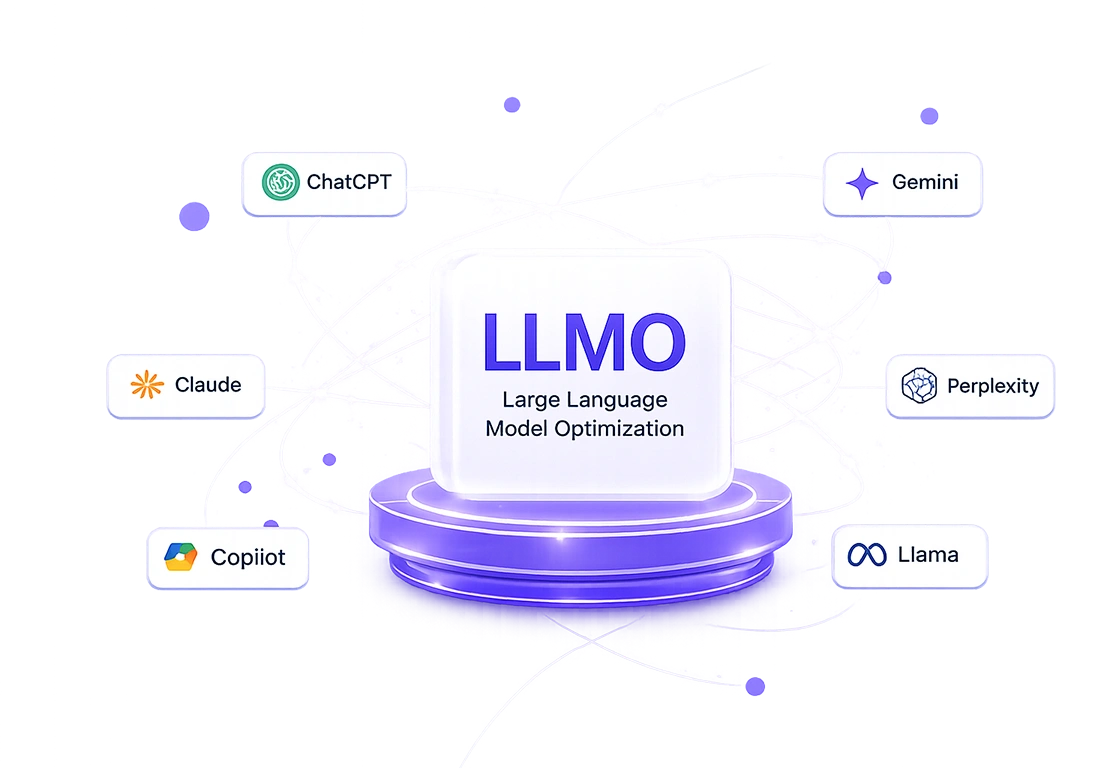
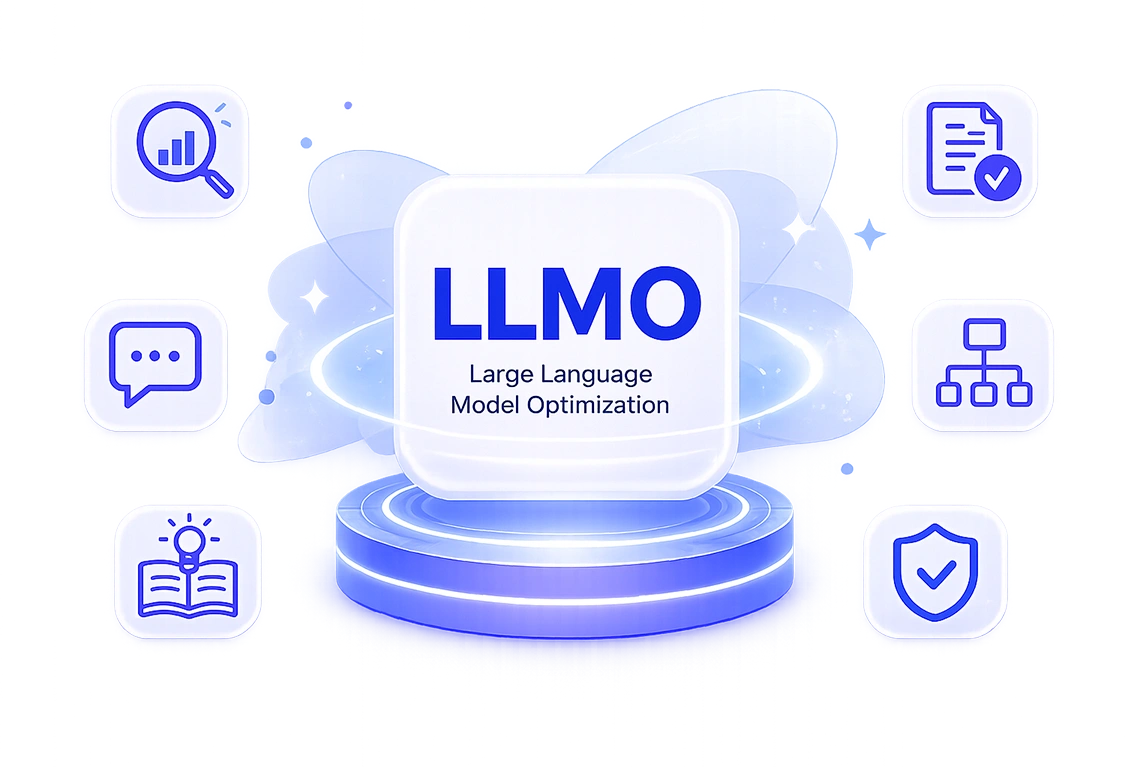
LLMO meaning and Large Language Model Optimization illustration

Why Does LLMO Matter for AI Search?

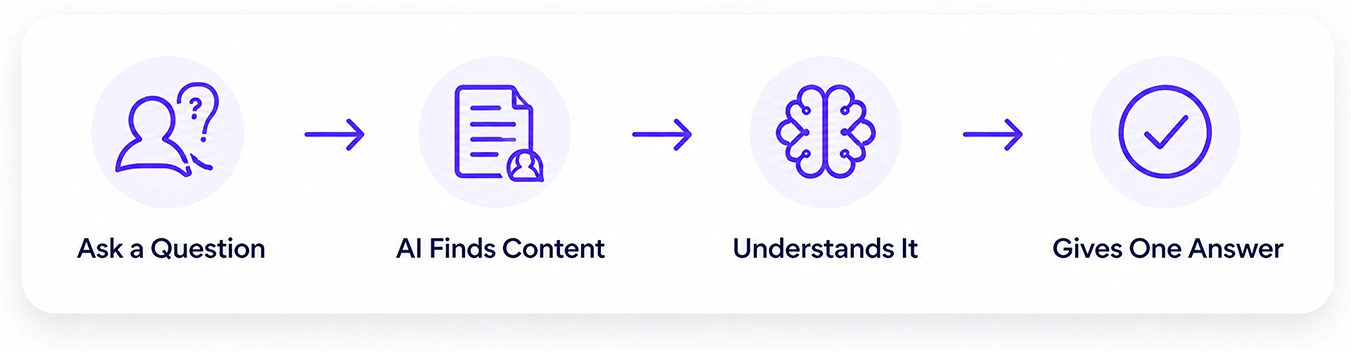
LLMO matters because people are increasingly using AI search and AI assistants to find information about brands, products, services, and questions. Instead of only viewing traditional search results, users can receive answers directly from systems such as ChatGPT, Gemini, Claude, and other large language models.

LLMO helps improve AI visibility by making your brand, content, and key information easier for AI systems to understand, retrieve, and represent accurately.

According to Google Search Central (2026),
AI Overviews and AI Mode
can show links to supporting web content in AI-powered search experiences.

Research by the 2026 LLM brand citation study shows that 85.7% of the 167,551 URL-grounded citations analyzed pointed to third-party websites, compared with 14.3% to brand-owned sites.
Read the research study.

Large Language Model Optimization for AI search

LLMO is the practice of making your brand information easier for AI systems to understand, retrieve, and represent accurately when users ask questions relevant to your business.

Google reported that AI Overviews had surpassed 1.5 billion monthly users across more than 200 countries and territories by May 2025. Google also reported that AI Overviews were driving more than a 10% increase in usage for the types of queries where they appeared in the U.S. and India.

This can increase the opportunity for your brand to appear in AI-generated answers, brand mentions, recommendations, and citations.

LLMO does not replace SEO, GEO, or AEO. It works alongside them to strengthen visibility across traditional search and AI-powered search experiences.

How Does LLMO Compare to GEO and AEO?

LLMO, GEO, and AEO all improve visibility in AI-powered search, but they focus on different goals. LLMO focuses on how large language models understand and represent information, GEO focuses on visibility and citations in generative search, while AEO focuses on providing direct answers to user questions.

LLMO: Improve how AI models understand and represent your brand and content.LLMO focuses on improving LLM visibility by helping language models understand and accurately represent a brand.

GEO: Improve visibility and citations in generative AI search results.

AEO: Optimize content to provide direct answers to specific questions.

These approaches overlap and can work together as part of a broader AI search optimization strategy.

Comparison LLMO vs AEO LLMO vs GEO LLMO
Scope One specific question with one direct answer. Being cited within AI-generated search summaries. How language models understand and represent your brand across the web.
Typical Surface Featured snippets, voice assistants, AI chat answers. Google AI Overviews, Perplexity, AI search summaries. Any LLM conversation, including ChatGPT, Claude, Gemini, and Copilot.
Time Horizon Immediate, query-by-query optimization. Immediate visibility in AI-generated search experiences. Long-term entity recognition and brand understanding by language models.
Core Lever Precise, extractable answers with FAQ and schema markup. Structured, citable content supported by semantic relevance. Consistent entity information, topical authority, and trusted web signals.
Primary Goal Provide the best direct answer to user questions. Increase AI citations and visibility in AI search. Strengthen how AI models understand, recall, and recommend your brand.
Success Metrics Featured snippet ownership, voice search visibility. AI citations, AI Overview mentions, brand visibility. Brand mentions across LLMs, entity recognition, and trusted AI recommendations.
The Important part

Think of it as three overlapping rings rather than three separate strategies. The underlying habits — clear structure, defined terminology, honest and consistent facts, solid schema — improve your standing in all three at once.

How Does LLMO Work?

How LLMO works by making your website and brand information clear, consistent, structured, and trustworthy, so large language models can more easily understand, retrieve, and represent it in AI-generated answers. Key parts of how LLMO works include:

How Do Large Language Models Understand Your Brand?

Large language models can form an understanding of your brand from information available across your website, structured data, trusted third-party sources, and other relevant content. LLMO helps make these signals clear, consistent, and easier for AI systems to interpret.
Brand identity information for AI systems

Your Website Content

Clearly state your brand name, what you do, your products or services, target audience, expertise, and important facts using consistent language.

Connected brand entities understood by AI

Structured Data and Schema

Use relevant structured data and schema markup to help search engines and AI systems identify your organization, products, services, articles, and other entities.

Structured brand knowledge for AI systems

Third-Party Sources

Relevant directories, reviews, publications, comparison pages, and other credible sources can provide additional information and context about your brand.

Brand content used by large language models

Entity and Brand Consistency

Keep your business name, descriptions, products, services, and other important facts consistent across your website and credible external sources.

AI system interpreting brand information

Freshness and Accuracy

Regularly update important information and correct outdated or conflicting facts so users and AI systems can find more accurate information.

How Do LLMs Choose Sources?

LLMs may use information from training data, retrieved web content, structured information, and other relevant sources when generating answers. Clear, relevant, authoritative, and well-supported information can make a source easier for AI systems to understand and use. Research published in 2026 analyzed 167,551 URL-grounded citations across 128 brands, 12 markets, and 13 languages and found that 85.7% pointed to third-party websites.

How to Optimize for LLMs

To optimize for LLMs, make your website and brand information clear, consistent, authoritative, and easy for AI systems to understand and retrieve. LLMO optimization focuses on making your content, entities, and brand information clear, consistent, authoritative, and easy for AI systems to understand.

How To optimize for ChatGPT and other AI assistants, provide clear and consistent brand information, publish authoritative content, use structured data, and maintain accurate information across your website and trusted third-party sources.

LLMO, or LLM optimization, focuses on improving how large language models understand and represent information.

LLMO Checklist:

Use consistent brand information, relevant structured data, clear terminology, credible third-party sources, accurate content, and regularly updated key pages.

Brand identity and business information for LLM understanding

Define Your Brand Clearly

Clearly explain who you are, what you do, what you offer, and who you serve across your homepage, About page, and relevant content.
Organization schema markup for search engines and LLMs

Use Organization Schema

Implement appropriate Organization schema and structured data to help search engines understand your business and important entities.
Important terms and concepts defined for large language models

Define Important Terms

Clearly define industry-specific, technical, or unique terms so large language models can understand their meaning and context.

Consistent brand information across website and external sources

Keep Information Consistent

Keep your brand name, services, products, pricing, and other important facts accurate and consistent across your website and trusted external sources.

Connected business information and trusted online sources

Build Genuine Third-Party Presence

Earn relevant mentions, reviews, citations, and references from credible third-party sources such as industry publications, directories, and independent websites.

Protecting brand information from inaccurate or conflicting data

Avoid False Trust Signals

Do not use fake reviews, fabricated statistics, invented customer numbers, or misleading claims. Accurate information supports long-term trust. For AI trust and risk guidance, see the NIST AI Risk Management Framework.
Educational content and expertise for LLM understanding

Create Topical Content

Publish useful, original content that answers questions and demonstrates genuine topical authority in your area of expertise.

Accurate and organized information for AI systems

Keep Content Fresh

Review and update important pages regularly to keep information accurate, relevant, and consistent.


How to Measure LLMO Performance

LLMO performance can be measured by tracking brand visibility in AI search, AI-generated mentions, citations, and how accurately AI systems represent your business.

  • AI brand mentions — how often AI systems mention your brand for relevant queries.
  • AI citations— how frequently your website or content is cited as a source.
  • AI search visibility — how often your brand appears in relevant AI-generated results.
  • Brand accuracy — whether AI systems describe your business, products, and services correctly.
  • Competitor visibility — how your AI visibility compares with competing brands.
  • Share of AI answers — how frequently your brand appears compared with other relevant sources.

Regularly monitoring these signals can help identify opportunities to improve your LLMO, AI SEO, GEO, and overall AI search visibility.

Measuring LLMO performance and AI search visibility

Key metrics include AI mentions, citations, brand visibility, and AI search performance.

LLMO Best Practices, Strategies and Techniques

Effective LLMO strategies focus on making information clear, trustworthy, consistent, and useful for large language models. The most important LLMO best practices include:

LLMO best practices for optimizing website content

These LLMO techniques can support AI search visibility, brand mentions, citations, and accurate representation across AI-powered search and assistants. Common LLMO methods include improving content clarity, entity consistency, structured data, topical authority, source credibility, and information accuracy.

What Is LLMO Used For?

LLMO use cases include improving AI brand visibility, supporting accurate brand representation, increasing opportunities for AI citations and mentions, and helping large language models understand a business, product, service, or topic.

AI brand visibility removebg preview

AI brand visibility

Brand mentions

Brand mentions

AI citations

AI citations

Accurate brand

Accurate brand representation

Entity understanding

Entity understanding

Visibility in AI generated answers

Visibility in AI-generated answers

Clear content structure for AI understanding

What Are the Benefits of LLMO?

LLMO benefits for AI search visibility and brand recognition

LLMO benefits include clearer brand representation, stronger AI search visibility, better entity understanding, and greater opportunities for relevant AI mentions and citations.

How to Optimize Content for LLMs

To optimize content for LLMs, create clear, factual, well-structured, and authoritative content that directly answers relevant questions. Define important entities and terminology, use appropriate structured data, support factual claims with credible sources, and keep information consistent and up to date.

Clear definitions and direct answers icon

Clear definitions and direct answers

Descriptive headings and logical structure icon

Descriptive headings and logical structure

Original and useful information icon

Original and useful information

Relevant schema markup icon

Relevant schema markup

Credible sources and citations icon

Credible sources and citations

Consistent brand information icon

Consistent brand information

Regular content updates icon
Regular content updates

LLMO for ChatGPT, Gemini, and Other AI Assistants

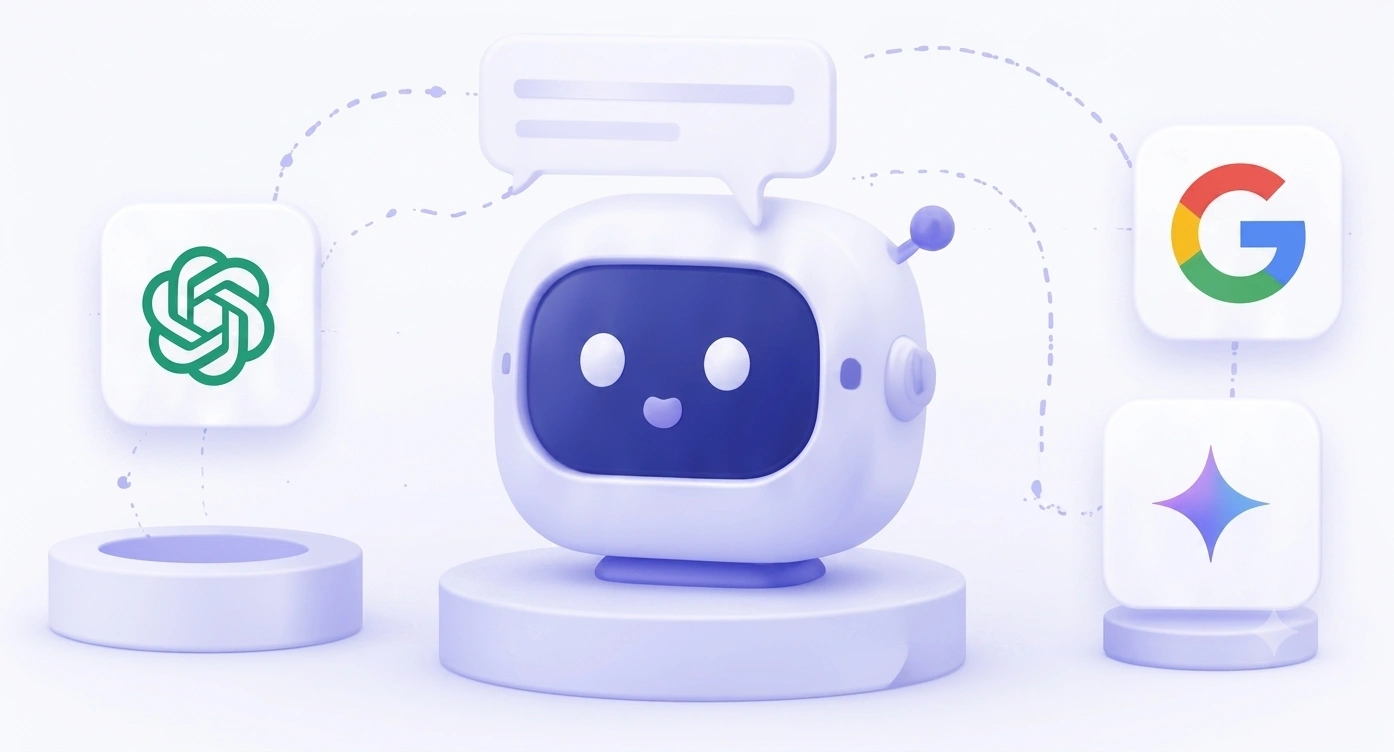
LLMO can help make your brand information easier for AI assistants and large language models to understand and represent. ChatGPT, Gemini, Claude, and other AI systems may use different combinations of model knowledge, retrieved information, and available sources, so there is no single technique that guarantees a brand mention or citation.

The best approach is to maintain accurate, consistent, authoritative, and clearly structured information across your website and relevant third-party sources.

AI assistants and LLMO brand representation

How Do SEO, GEO, AEO, and LLMO Relate?

These terms overlap heavily and you’ll see them used inconsistently across the industry. A simple way to hold them apart:
Generative Engine Optimization

GEO (Generative Engine Optimization)

optimizing content and digital signals to improve a brand’s visibility and likelihood of being referenced or cited in generative AI search experiences.
SEO optimization for traditional search engines

SEO (Search Engine Optimization)

SEO improves a website’s visibility in traditional search while also providing foundational signals that can support discovery across AI-powered search experiences.
Answer Engine Optimization for direct answers

AEO (Answer Engine Optimization)

optimizing content to be pulled as a direct, standalone answer to a specific question (voice assistants, featured snippets, chat answers)
What Are the Most Common LLMO Mistakes?

Common LLMO mistakes can make it harder for AI systems to understand and accurately represent a brand.

  • Inconsistent brand information: Different descriptions, names, services, or facts across your website and external sources can create confusion.
  • Ignoring structured data: Missing relevant schema markup can make important entities and relationships less explicit.
  • Outdated information: Old or conflicting content can lead to inaccurate brand information being retrieved or represented.
  • Weak topical authority: Publishing little useful content around your core topics can make your expertise harder to establish.
  • Ignoring third-party sources: Relevant reviews, publications, directories, and credible mentions can provide additional context about your brand.
  • Using fabricated trust signals: Fake reviews, statistics, testimonials, or misleading claims can damage credibility.
  • Treating LLMO as a one-time task: Your content and business information change, so important pages should be reviewed and updated regularly.
LLMO common mistakes and optimization challenges

Ready to Check Your LLMO Readiness?

LLMO tools can help evaluate AI search visibility, brand mentions, citations, content quality, structured data, and other signals related to AI search optimization. AISEOgic provides an AI SEO & GEO audit that can help identify opportunities across SEO, AI SEO, GEO, AEO, and LLMO.

Frequently Asked Questions About LLMO

LLMO meaning refers to Large Language Model Optimization, the practice of making website and brand information easier for large language models to understand, retrieve, and represent accurately.
LLMO is the process of optimizing content, brand information, entities, and digital signals to improve how large language models understand and represent a brand or topic in AI-generated answers.

SEO focuses primarily on visibility in traditional search results, while LLMO focuses on how large language models understand and represent information. LLMO works alongside SEO rather than replacing it.

GEO focuses on visibility and citations in generative search experiences, while AEO focuses on providing direct answers to specific questions. LLMO focuses more broadly on how large language models understand and represent information.

Use clear and structured content, consistent brand information, relevant schema markup, strong topical authority, accurate facts, and trustworthy third-party sources to make your information easier for AI systems to understand.

You can monitor AI brand mentions, AI citations, AI search visibility, brand accuracy, competitor visibility, and how frequently your brand appears in relevant AI-generated answers.
You cannot directly control what an AI system says about your brand. However, providing accurate, consistent, authoritative, and well-structured information across your website and credible external sources can help AI systems better understand and represent your brand.
Large Language Model Optimization meaning is the practice of making website content, brand information, products, and expertise easier for large language models to understand, retrieve, and represent accurately.
FAQ and structured data for GEO